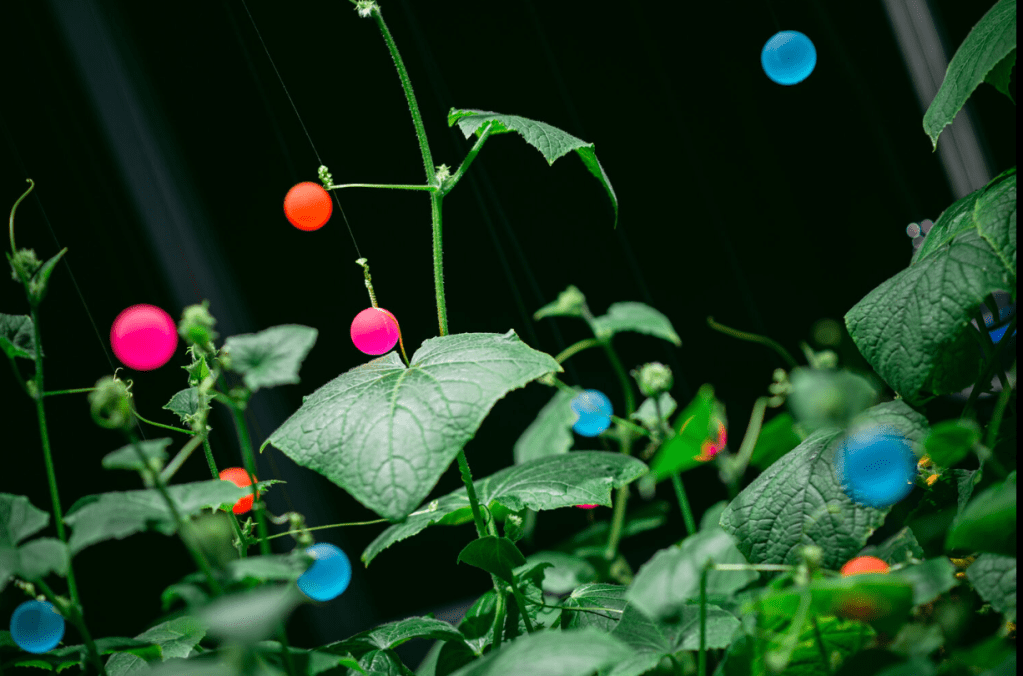
Book project summary
I would like to talk about a book project with the tentative title Machines to be Another. This book will be exploring empathetic algorithmic art, procedural screen works, and simulated digital and robotic environments. As with any other form of art, algorithmic art is explaining people to themselves as a reflection of human behaviour or mental patterns. Machines to be Another will explain people to themselves by means of their interactions with a variety of others or narration of the possible interactions. These interactions take two poles: machines of affection that allow one to permeate the other’s personal boundaries and machines of destruction breaking one’s own boundaries.
Perceptually, these two can be connected as machines of empathy. Both intense pleasure and intense destruction cause projection of self necessary for empathetic perception. It is known that the same part of the brain is responsible for both pleasure and pain, and they shape an experience equally strongly. Intense pain of the other, be it a human, an animal, or a machine, causes compassion to one’s own fragile self, known as cathartic projection. Affection is built through repeated connection or exposure to a phenomenon or an entity. In both cases, einfühlung (feeling into, or empathy) is happening through emotional proximity. So the empathy machine would be the ultimate form of the communication machine, the machine that not only sends and receives the messages over distance but also creates the conditions for their emphatic perception.
The production of affect is structured either through the experience of the body of another shape or of another sort. Different bodies sense differently. The experience of being in a different body can be achieved by means of delegating control over one’s body to a robotic entity (Inferno or Gravitational Bodies). The other form of altering bodily perception is the replacement of ‘the real environment’ with the simulated environment, as done in VR. This experience is staged through an unusual point of view on the existing reality (person with bipolar disorder, chair, bat, person of the opposite sex, homosexual, etc.) or through altering physical reality such as weather (Nemo Observatorium, cloud machines, fog machines). Disembodiment is characteristic of the machines of destruction and may be empathized by demonstrating or imitating parts of human or animal bodies (SRL, Totendanz) or flesh-like visceral substances (My red motherland, I cannot help myself).
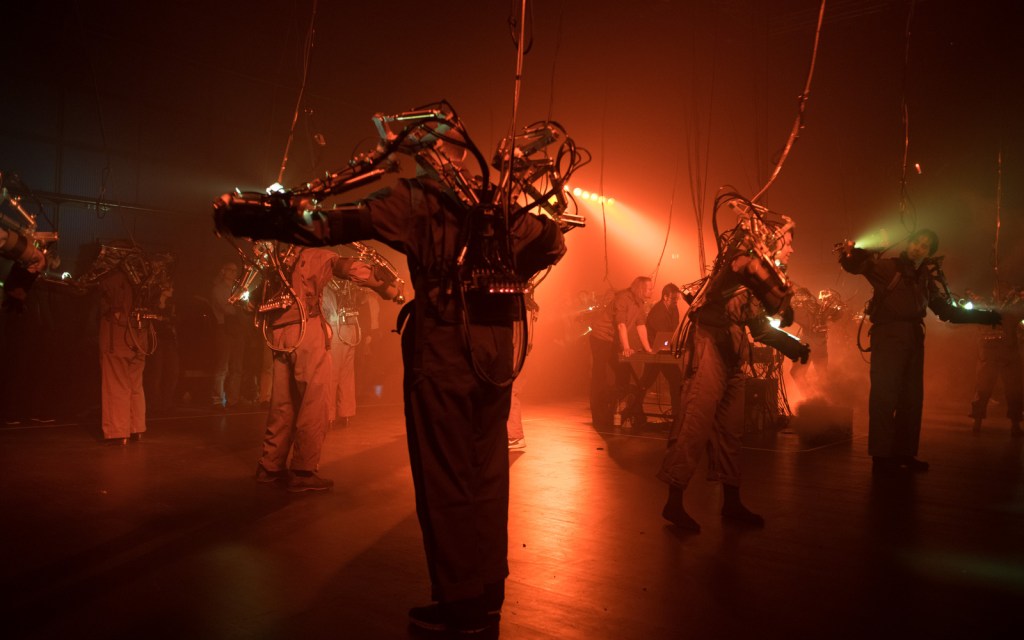
The first chapter provides an art historical context to the studies of machine art. German art historian Andreas Broeckman points out four other types of machines. The first and most obvious would be the Archimedean machine, the most straightforward one, taking in the raw material and performing repetitive operations on it with a predictable result. Such a machine is a conveyor belt or a car. The second one is a machine celebataire, taking raw material, producing repetitive operations, but not assembling any tangible result; akin to it would be a machine of desire only leading to more desires. Chilean biologist and cybernetician Humberto Maturana and his colleague described living beings as autopoetic machines. Alan Turing proposes a universal machine that can break up any problem into smaller operations that are solvable mathematically, thus proposing the project of a contemporary computer and even further, artificial intelligence.
Communication and sending messages over distance is another implementation of the universal machine taking our voices, faces, and words as raw material and sending them to the provider’s server, then to the remote server, then through cables to the server of another provider, and then to the receiver, as a result producing online communication, exchange, staying in touch, solitude, and depression. Previous crisis of physical movement of humans, COVID has offered a staple tool for connecting people digitally—video conferencing. We all know the shortcomings of telecommunication. The communication machines need to be producing empathy.
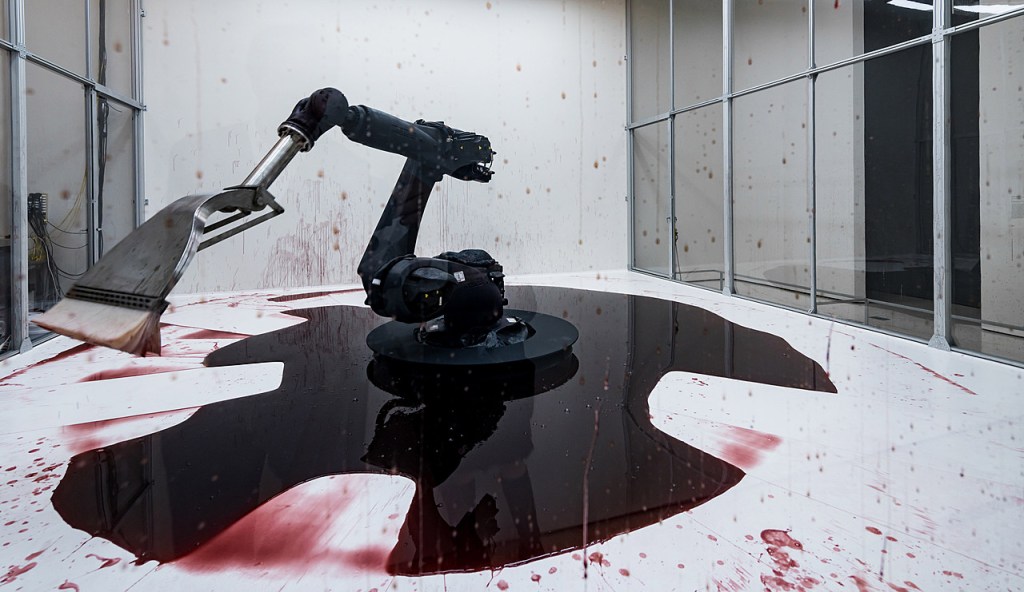
The second chapter of the book discusses the correlation between the aesthetic and empathetic perception of art, particularly in the context of installation and robotic art. It explores the connections between aesthetic perception, embodied experience, and the ability to convey emotional experiences through art and then delves deeper into the cognitive processes underlying aesthetic perception, arguing that it is an active, interactive experience that can evoke sudden “Aha!” moments of comprehension. This aesthetic perception may be rooted in a more general capacity for “mind-wandering” and holistic understanding, with links to empathetic processes in the brain. Building on these ideas, the chapter explores how installation art can create “emotionally charged environments” that foster affective empathy—the ability to perceive and express emotions. Works like Anish Kapoor’s red sculptures invite the viewer into the “body” of the artwork, encouraging them to share in the pain and experiences of the sculptural forms. The Sun Yuan and Peng Yu installation “Cannot Help Myself” takes this further, using a robotic arm to manipulate a viscous, blood-like liquid in a way that evokes a sense of danger and detachment from the suffering of the “other.”.
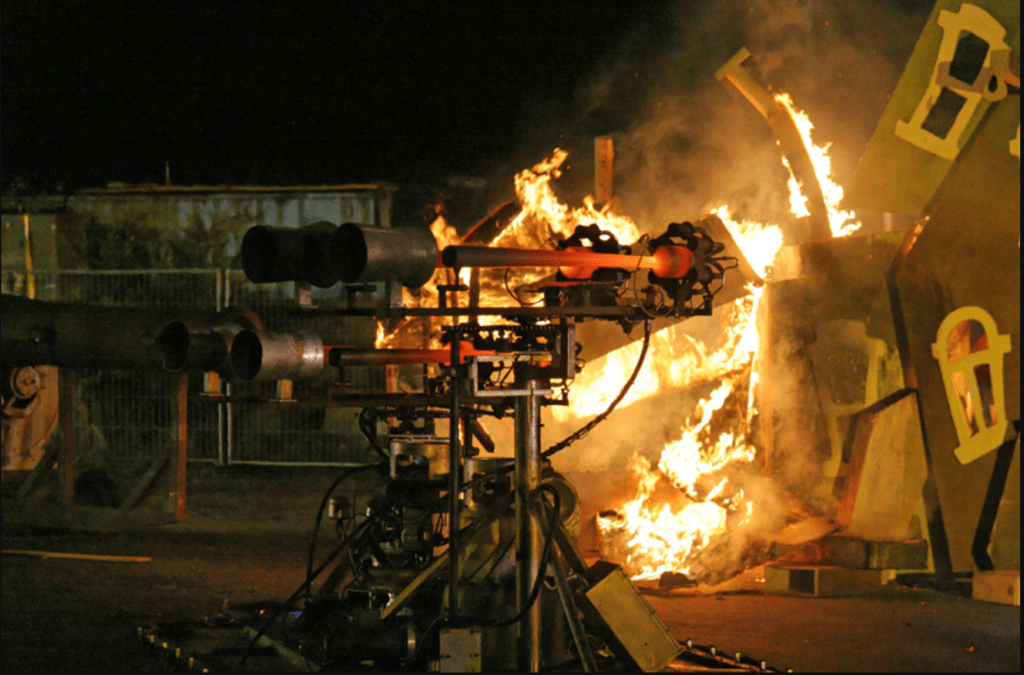
The third chapter explores the paradox of the empathetic potential of helpless and auto-destructive machines that evoke cathartic projection, feeling sorry for the failing of the machines. The text explores the works of artist Jean Tinguely and the performance art group Survival Research Labs (SRL), both of whom utilize machines and technology as a means to express themes of destruction, violence, and the cyclical nature of life and death. Tinguely’s auto-destructive machines, often created from salvaged materials, serve as a critique of industrial civilization and the transience of existence. Meanwhile, SRL’s performances combine spectacle and satire to explore the relationship between technology, violence, and the human psyche, often employing pyrotechnics and mechanical contraptions to create a sense of awe and unease. The text highlights the commonality in both artists’ works, which utilizes destruction and spectacle to challenge the viewer’s perceptions of technology and the human condition.
The fourth chapter is focused on the use of simulated environments and artificial nature to create speculative models that challenge our perceptions and uncover the underlying principles governing natural, social, and technological systems. These works, like Timothy Thomasson’s “I’m Feeling Lucky” and Pierre Huyghe’s “Liminal,” blend the real and the artificial, blurring the boundaries between them.

The fifth chapter will examine whether VR and immersive spaces can create alternative sensoriums that allow for more intensive sensory experiences than physical spaces and explore their potential for understanding the world and others’ feelings. It investigates how these designed sensoriums can create focused attentional environments while considering both their aesthetic potential and commercial risks.

 nataliafedorova.com
Leave a comment